Royal Victoria Hospital, Belfast
Interactive Sonification
Commissioned and supported by CETL Northern Ireland, and the Sonic Arts Research Centre (Queen’s University, Belfast).
Commissioned and supported by CETL Northern Ireland, and the Sonic Arts Research Centre (Queen’s University, Belfast).
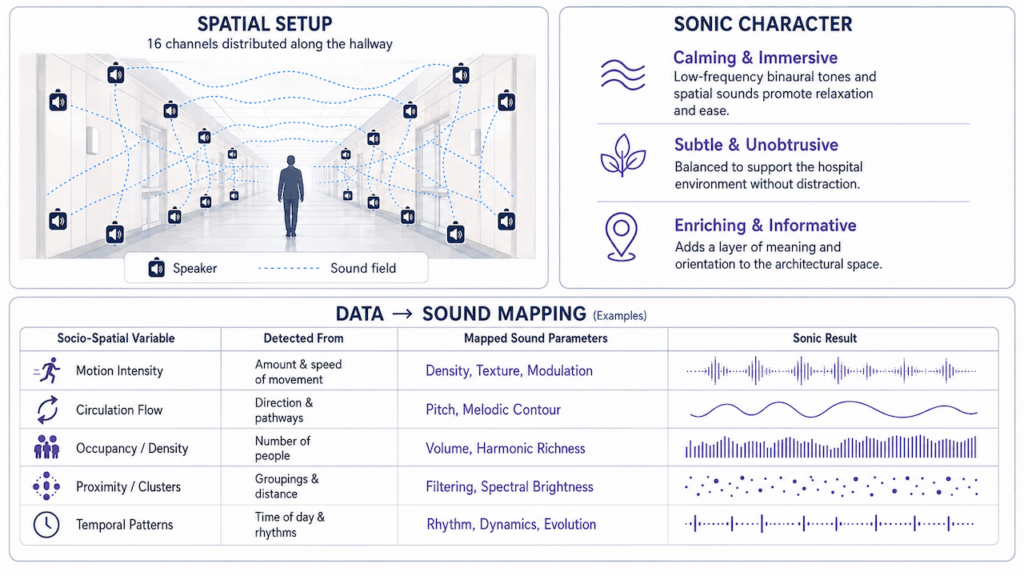

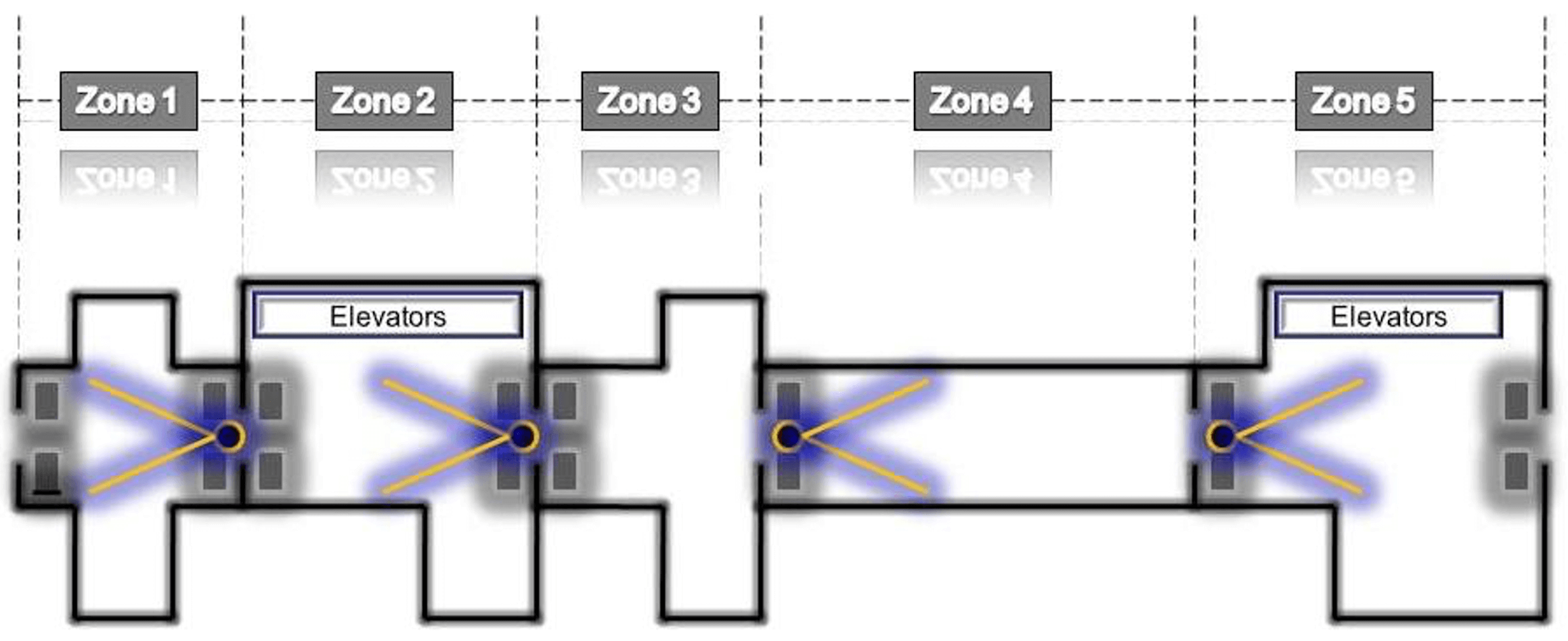
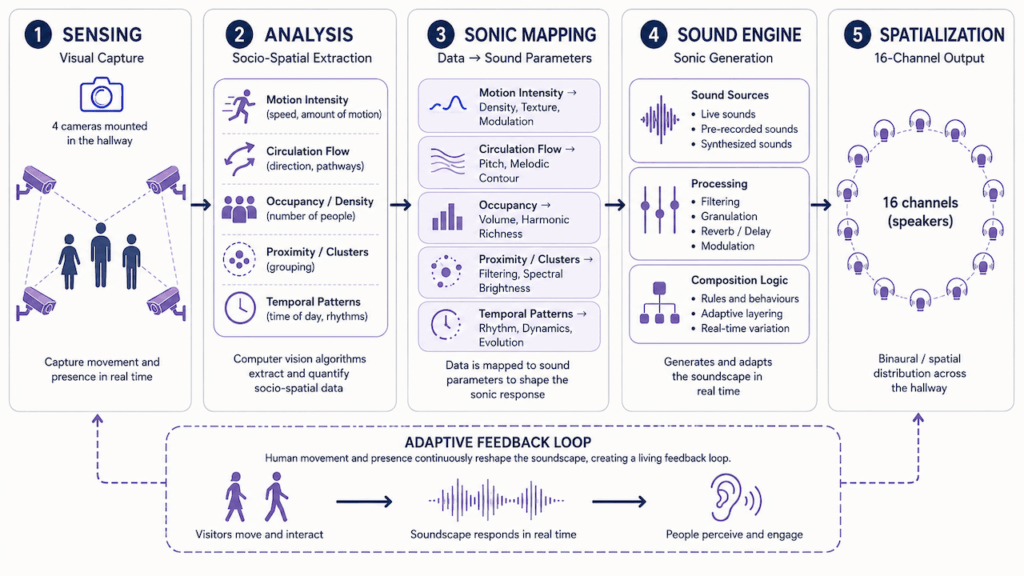
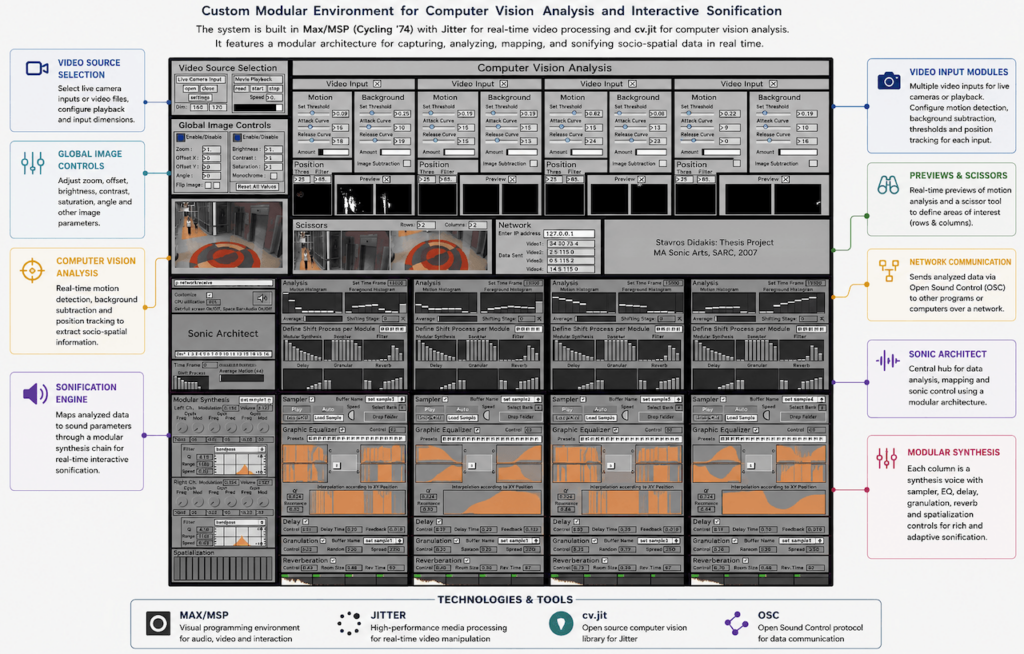
Royal Victoria Hospital is one of the biggest and most well-known hospitals in Northern Ireland. This interactive sonification system, funded by CETL, was installed in the main hallway of the hospital, which plays the role of a physical navigational interface, providing access to clinics, wards, and also connections via lifts to other levels of the building. The generated aural experience utilizes a range of methodologies to construct the sonic landscape (mainly with live and pre-recorded sounds, sound synthesis, and audio effects). The articulation of the sonic elements is directly related to the socio-spatial information that is extracted from the participants in the main hallway. Shifting events take place in time and space, and the system’s fluidity depends on the occupants’ direct or indirect interactions. The system proposes functions and ideas that may be ‘familiar’, ‘engaging’, and ‘immersive’ (Bandt, 2002), and zoning techniques have been devised to enhance the spatial dimensions of the architectural space. The system uses 4 cameras as the sensory mechanism, and 16 channels to distribute the sound in space; the sonic articulation provides a case that fluctuates ‘between art, function, real and virtual’ (Crow & Prior, 2004).
The installation operates through a modular system that analyses visual and spatial data in real time, translating patterns of movement and presence into dynamic sonic responses. Using computer vision algorithms, the system captures socio-spatial information such as motion intensity, circulation flow, and occupancy, and maps these variables to various sound parameters including pitch, filtering, and spatialization. As a result, the soundscape continuously evolves with the rhythm of the space, growing denser during busy periods and more minimal when the hallway is quiet. This adaptive process transforms the hallway into an ever-changing auditory environment, where each visitor contributes to the composition simply by moving through it. The interaction between human activity and sound creates a feedback loop that reflects the collective energy of the hospital’s social life.
The sonic design of the installation seeks to balance artistic engagement with sensitivity to the hospital environment. The aural atmosphere is carefully tuned to be immersive yet unobtrusive, offering a sense of calmness and curiosity without disturbing the hospital’s primary functions. Low-frequency binaural tones, spatialized across sixteen speakers, encourage relaxation and orientation, while environmental and synthesized sounds subtly enrich the architectural space. By recontextualizing the hospital’s hallway through sound, the installation redefines how visitors perceive and inhabit the space, turning a transitional corridor into a sensory experience that is both meditative and informative. In doing so, it demonstrates how sound art can humanize institutional environments, fostering awareness, reflection, and emotional connection within everyday architectural contexts.