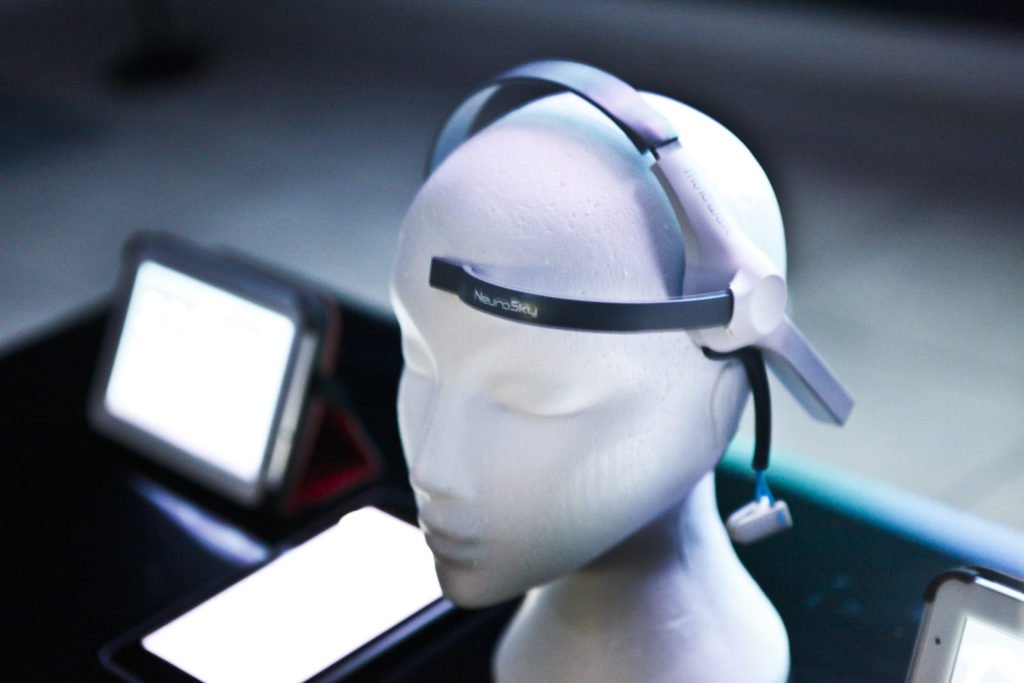
Configured as a responsive instrument, the installation recalibrates continuously from neural biosignals (MindWave) and audience phones, converting attention and arousal into operational inputs that redistribute authorship across genre zones. A live mixing engine braids multitrack stems through shifting time signatures while the visual system recomposes content across spatial screen fragments in step with rhythmic and spectral cues. The installation tests how bodies become interfaces and how metrics govern culture: signals are scored, influence is tallied, and participation oscillates between collaboration and competition. Rather than staging open-ended freedom, it exposes curated forms of agency where rules, thresholds, and technical infrastructure (MaxMSP, Jitter, Python, Node.js, MongoDB, HTML, JavaScript) script possible frameworks of participatory interactions. The result is a phenomenology of co-authorship that treats intention, preference, and contention as aesthetic material, inviting reflection on biopolitics, cybernetic control, and the ethics of measurement in participatory art.
Neural Control for Realtime Audiovisual Content
Commissioned artwork, Leicester Arts Centre (UK)
Media Installation, Custom-Software, Brainwaves Sensor, Tablets, Mobile Phones
2013